
Whoa! I remember the first time I clicked into a Solana tx and felt totally lost. Really? Yeah. The raw data looks dense and kinda scary at first. But here’s the thing. With the right mental model you can parse transactions, spot failed instructions, and follow token flows without needing to be a node operator or a full-time dev.
On one hand the blockchain is a transparent ledger. On the other hand the data is low-level and terse. Initially I thought that eyeballing a transaction would be enough, but then realized you need context: program IDs, instruction types, and recent block history. Actually, wait—let me rephrase that: the raw fields tell you the what, and explorer UI and analytics give you the why. My instinct said start with the transaction summary. Then dig into the instruction list and account changes when you need to troubleshoot.
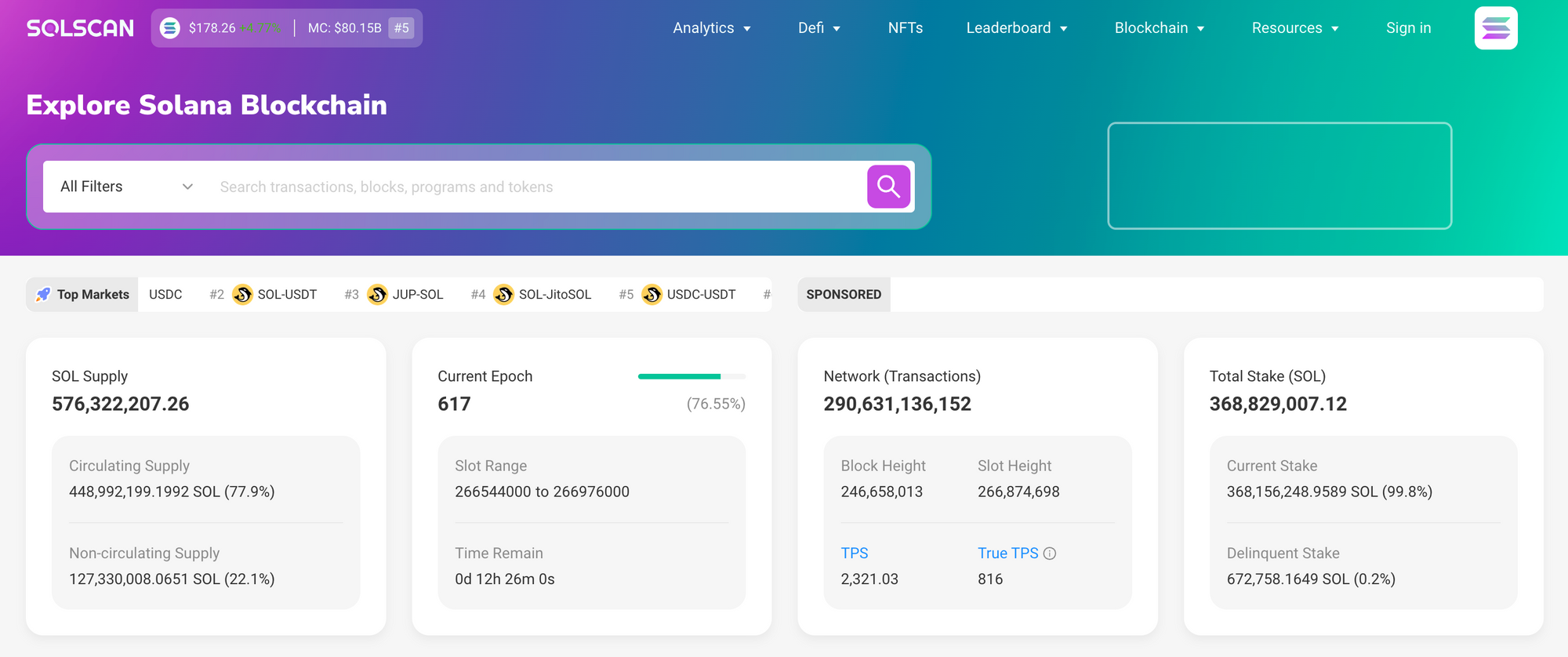
Okay, so check this out—if you want one-stop browsing for Solana transactions, balances, and token analytics, the Solscan interface is a solid place to start. I use it all the time when troubleshooting trades or confirming withdrawals (and yes, I’m biased, but it’s fast and pragmatic). You can visit a curated explorer at https://sites.google.com/cryptowalletextensionus.com/solscan-explorer-official-site/ to jump right in.
Start with the Transaction Summary
Short summary first. Then details. Read the top: status, fee, block time. Status tells you success or failure. A failed tx often includes a program error code—those codes matter. Look at the fee. On Solana it’s tiny most of the time, but spikes happen during congestion.
Next scan the “signatures” list and the “accounts” snapshot. Those reveal who signed and which accounts were read or written. If you’re tracking a token swap, watch for token program instructions referencing token mint addresses and associated token accounts. That little bit of metadata is very very important when you’re following funds across accounts.
There’s a subtlety: not all programs annotate human-friendly names. So sometimes you must map program IDs to common contracts (like Serum, SPL Token, or a known router). (oh, and by the way…) If a tx calls a custom program, you’ll need to interpret the instruction data or cross-check the program repo to know what’s happening.
Decode the Instruction Stack
Hmm… this is where it gets interesting. The instruction list is the transaction’s playbook. Each line is an action. On swaps you’ll often see approve, transfer, and settle-like steps. Sometimes a swap is bundled across multiple programs, which makes it look sequential but actually atomic.
Work through them one by one. Ask: which accounts are being debited? Which program is invoked? Did a CPI (cross-program invocation) happen? On one hand CPIs are normal. On the other hand they can obscure pieces of logic (so pay extra attention when funds move through intermediary accounts).
When a transaction fails, the explorer will usually show the failing instruction index. Use that index to pinpoint the problem. For example, if an approve instruction fails it might be a missing signature. If a token program transfer fails there could be insufficient balance or a frozen account. These diagnostics save you time instead of guessing.
Practical Analytics: What to Look For
Track these metrics regularly: daily tx volume, average fee, number of unique signers, and token holder concentration. Those tell you whether a token or program is growing legitimately or being dominated by a few wallets. I’m not 100% sure on thresholds for risk, but a single holder controlling >30-40% of circulating supply is a red flag for me.
Use analytics to spot unusual patterns. Repeated tiny transfers from the same set of accounts might indicate dusting or micro-sybil behavior. Large outgoing transfers to unknown addresses after a period of inactivity deserve a closer look—especially before you act on rumor-driven FOMO.
Pro tip: export activity where possible. Many explorers and analytics tools let you export transaction lists or holder tables to CSV. Offline analysis is quicker for spotting clusters, spikes, or repetitive bot-like behavior.
Token Tracker Essentials
Token pages are gold. They list supply, holders, transfers, and recent mint/burn events. If a token has minting rights retained by a central authority, that matters. Seriously? Yes—centralized minting can dilute holders overnight if governance permissions are misused.
Peek at “top holders” and the “transfer timeline.” A sudden sell-off from a top holder often precedes price declines. On the technical side, check whether the token uses associated token accounts the standard way (SPL tokens usually do). Alternate account patterns can complicate on-chain analysis.
Here’s what bugs me about some dashboards: they present charts without the raw tables. Charts are nice, but the table with exact tx hashes is the evidence. Always click through to raw txs when something seems off.
Common Pitfalls and How to Avoid Them
First mistake is assuming human-readable names are authoritative. They aren’t. Alias mappings on explorers are convenient, but a program ID could be impersonating a well-known project if not verified. Double-check contract addresses against official project communications when dealing with large sums.
Second mistake: trusting lazy assumptions about fees. During congestion fees can spike unexpectedly, and a replaceable transaction strategy might fail if you don’t set a sensible priority fee. Also, watch for nonce or durable nonce usage in some advanced signing flows.
Third: misreading token decimals. A transfer of “1000000” might be 1.0 token depending on decimals. That tiny mismatch has burned people. Always confirm decimals on the token page before you interpret amounts.
Frequently Asked Questions
How do I find a transaction hash for a wallet action?
Check the wallet’s activity list on the explorer and click the specific item. The hash is the unique identifier at the top of the tx page. If you only have a timestamp, search blocks around that time to locate the tx.
Can I see which token holders received airdrops?
Yes. Token transfer history and the holder ledger show distribution. Use the token page to export holder lists or scan transfer events for timestamps matching the airdrop window.
Is there a way to watch transactions in real time?
Many explorers offer live feed or websocket APIs for real-time monitoring. If you’re serious about alerts, set up a small watcher that filters for program IDs or mint addresses you care about, then send notifications to Slack or email.
I’ll be honest—reading blockchain data well takes patience. Somethin’ clicks after a few dozen transactions and you’ll start to see patterns. My favorite habit is to trace a single token transfer from sender to final destination and note every intermediate program call. That exercise shows you common routing patterns and teaches you where to look when things go wrong.
If you’re building tooling or doing audits, combine explorer inspection with RPC calls and on-chain program docs. On one hand the explorer summarizes. On the other hand the chain and program sources are the final authority. You won’t spot everything from UI alone—though a good explorer like the one linked above gets you most of the way there.
Curious? Start small. Watch a swap, follow the instructions, check balances before and after, and repeat. Over time you’ll move from guessing to confident interpretation. And yeah, it’ll feel satisfying when you can explain a weird transfer to a teammate without relying on guesswork.
